


With its high proportion of parks and its proximity to the Peak District National Park, Sheffield is often referred to as ‘The Green City’. It was recently listed as the UK’s greenest city in a study by the University of Southampton, which ranked UK cities based on their energy use and production, waste and recycling, green space, motor vehicles, and pollution. Sheffield is well loved for its green space, but what many Sheffield residents do not know is that beneath their feet lies one of the pioneering District Energy networks in the country.
The Sheffield District Energy network was built in 1988, making it one of the first heat networks of its size in the UK. The network consists of 45km of insulated pipes, which distribute heat from the Veolia Energy Recovery Facility to 125 buildings around the city.
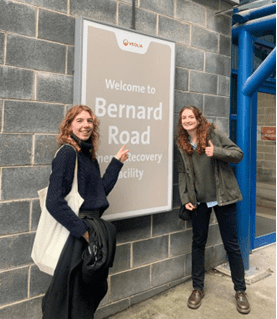
Low-carbon heating is a key area of interest for us at District Eating, and the District Eating team were lucky enough to visit the Veolia Energy Recovery Facility for a guided tour of the energy recovery process.
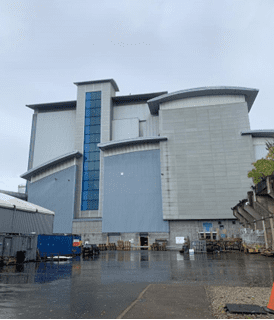
The process is simple. Veolia’s electric rubbish trucks deliver the city’s black bin waste to the energy recovery facility, where it is tipped into a storage bunker. An overhead crane feeds the rubbish into a hopper, which delivers the rubbish into an incinerator. Here, the rubbish is burnt at temperatures of up to 850°C. The incinerator heats a large boiler where steam is generated. This drives a turbine, which is used to generate electricity and heat water for the District Energy network.
The facility sends no material to landfill and emits only a small amount of CO2. Ash from the incinerator is passed under an electromagnet which removes metals to be recycled, and the goes on to the construction industry where it is used for road infills and breezeblocks. Cooled flue gases are filtered and cleaned using various chemical processes before being emitted.
Whilst at Veolia, the District Eating team got the chance to chat to staff about Veolia’s plans to improve the system and promote sustainability. Currently, 60% of waste burnt at the ERF could be recycled, but poor waste sorting at a household level means it ends up in black bins. Veolia is working with local authorities and households to identify and tackle obstacles to proper waste sorting.
Heating provided by Sheffield’s district energy network saves around 13,000 tonnes of CO2 from being released into the atmosphere each year. More homes, offices, and public buildings will need to be connected to district energy networks around the UK in coming years if we are to meet Net-Zero targets. For many people, this will mean getting used to operating a heat exchanger instead of a gas boiler. Clear communication is essential during this transition to improve public perceptions of heat networks. Veolia are working on this by improving the usability of their website and ensuring clear communication with their customers.
Are you interested in innovative ways of using of waste heat? Check out our projects, or get in touch for more information about how District Eating develops projects using low-carbon heat such as the Sheffield District’s Energy Network for horticulture.


